

From Ice Cream Dreams to a Food Empire: The Pinnah Foods Story
Jun 18, 2026
How Foluso and Shade Ogunleye left stable careers in the United Kingdom to build one of Lagos's most beloved food brands and why their obsession with standards made all the difference.
Before There Was a Business, There Was a Decision
The careers Foluso and Shade Ogunleye had built in the United Kingdom were, by any measure, enviable. Foluso had worked as a finance and business analyst with multinational giants including Shell and BP. Shade, an ACCA certified accountant, was also building a career in management accounting at the BBC and also the Consensus Business Group.

They were not restless people searching for escape, they were grounded professionals with stable, successful lives. But they shared a conviction that something else was possible.
The idea of building their own business had been growing quietly for years. They evaluated multiple opportunities, turned several over in their minds, and remained uncertain for a long time. One idea, in particular, they almost dismissed entirely.
Ice cream.
"The infrastructure requirements were significant. The capital investment was substantial and there were genuine questions about whether Nigerians would embrace a premium ice cream brand. By all conventional measures, it was an idea that should have been set aside. But we believed God had given us the vision, and the dream burned too deeply in our hearts to ignore. That divine inspiration gave us the courage to move forward when logic suggested caution, and to take a leap of faith into the unknown. With faith, determination, and a willingness to learn, we took the first step.”
The Bet Nobody Believed In
In the late 2000s, the Nigerian food market looked very different from what it is today. Premium, locally produced ice cream was almost nonexistent. The prevailing wisdom shared by friends, advisors, and industry observers was blunt: Nigerians would not pay premium price for gourmet ice cream. Some suggested that the founders combine ice cream with traditional Nigerian meals, because "ice cream alone" would not sustain a business.
Foluso and Shade disagreed.
They believed that if they could deliver a genuinely world-class product and experience, there would be a market for it. Not a compromise. Not a hybrid. The real thing.
To prove they meant it, they invested in a specialized ice cream-making training and retailer’s course in the United States. They returned not just with skills, but with a philosophy: source fresh milk. Use exceptional ingredients. Refuse shortcuts. Build something that could stand next to the best ice cream in the world, and win.
The Difficult Early Years
The origin story of Pinnah Foods is not glamorous but honest.
Because the founders had no Nigerian banking history, traditional financing was out of reach.
They turned to personal savings and loans from family. They rented a property, purchased equipment, invested in renovations and when it was done, they had almost no working capital left. For a period, they paid themselves minimal salaries. Sometimes, they paid themselves nothing at all.
Every naira was a decision.
Sourcing fresh milk, a non-negotiable for the product they wanted to make, proved its own battle. Many in the industry recommended preconstituted ice cream powdered mixes as a practical solution. The founders refused. Eventually, a carefully built partnership with a dairy farm in Northern Nigeria gave them the supply they needed but that refusal to compromise, even when compromise would have been easier, says everything about who these founders are.
The company was never built around convenience. It was built around uncompromising standards.
The Ice Cream Factory: A Nigerian Brand That Felt Global
The Ice Cream Palace officially opened its doors in 2009 and quickly captured the hearts of customers, earning a remarkable reception from the market.

What followed surprised even some of its most loyal customers. Guests frequently assumed the ice cream was imported. Others were convinced The Ice Cream Factory was a foreign franchise that had expanded into Nigeria. It was not. Every recipe was developed internally.
Today, the company has created more than 40 flavours, all crafted from scratch, each built through years of experimentation, customer feedback, and relentless refinement.
For Foluso, this remains one of the proudest achievements: creating a Nigerian brand so strong, so consistent, that it did not need a foreign name to earn trust.
When a Problem Becomes a Product: The Birth of Yin Yang Express
Yin Yang Express was never in the business plan.

When the founders originally rented their building on Victoria Island, they intended to sublet part of the space because they could not afford the lease for the entire building. When no suitable tenant materialized, they were left with a problem. But they saw something different.
The Ice Cream Factory was performing strongly during evenings and weekends. Weekday mornings and lunch periods were quiet, and the surrounding neighborhood was dense with offices with thousands of working professionals looking for quick, quality food every single day. The research pointed clearly to one answer: affordable, fast, quality Chinese meals. An underserved gap in a high-traffic location.
Yin Yang Express launched in 2010, built on a simple mission; to make Chinese cuisine accessible and genuinely affordable for everyday Nigerians.
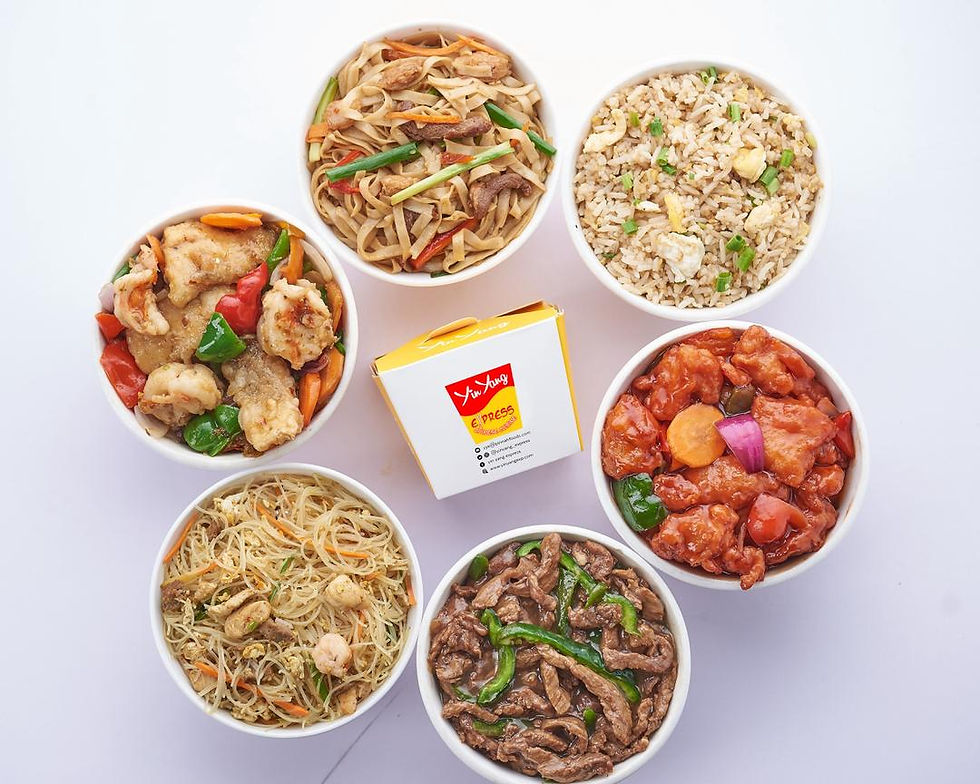
It was not a pivot. It was not desperation. It was a founder who turned an operational challenge into a business opportunity.
The Systems Builder
Spend time with Foluso Ogunleye, and a pattern emerges quickly.
He does not think like a restaurateur. He thinks like a systems builder. Conversations about the business invariably return to the same themes: documentation, inventory controls, process design, staff training, financial discipline.
"Do not trust people. Trust systems."
This philosophy explains a great deal about why Pinnah Foods has survived and grown in an industry where many businesses struggle with consistency. Long before operational systems became fashionable talking points in Nigerian entrepreneurship circles, Pinnah Foods was building them quietly, methodically, as a matter of principle.
Powered by People
Pinnah Foods describes itself as a company that is "Powered by People" and the stories behind that phrase are worth telling.
One employee joined as a restaurant team member. Today, that person works as a compliance officer and is about to transition to the People & Culture team. Another came in as a sanitation officer and then progressed to an ice cream technician and later joined the internal audit team.

These cases reflect a company culture that was deliberately designed to create room for people to grow and not just to fill roles.
In addition, they have a scholarship program designed for team members and entry level employees to support the pursuit of their higher education. For a business built by two people who once relied on the generosity of family to get off the ground, this commitment to people feels personal. Beyond business, they are driven by a greater mission to impact lives.
Where Pinnah Foods Stands Today
From a single concept born of stubbornness and belief, Pinnah Foods has grown into a multi-brand food company operating across Lagos.
The Ice Cream Factory now runs five locations. Yin Yang Express operates five locations. Together, the company serves customers across ten sites, employs dozens of staff, and continues to expand.
In 2025, the industry took formal notice.
Pinnah Foods received the Operational Efficiency Award at the Chowdeck Vendor Summit, a recognition for the systems, teamwork, and execution engine that most customers never see, but always feel.
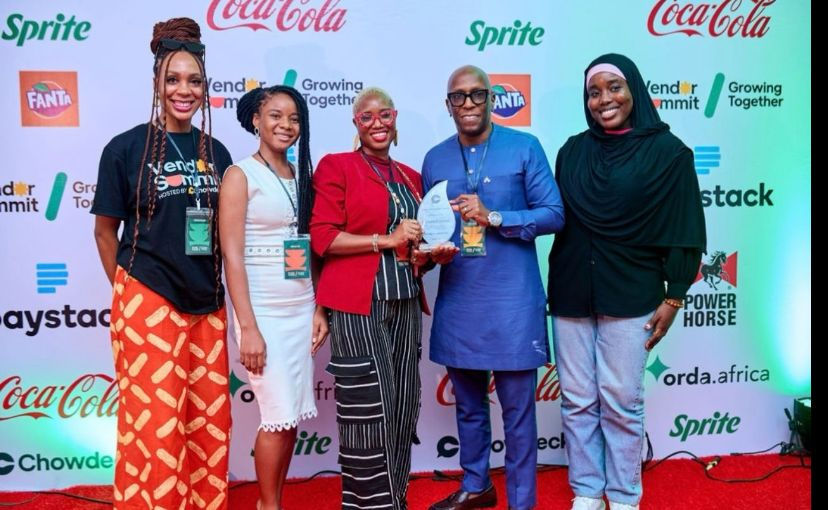
The company today positions itself not simply as a restaurant operator, but as a food company with a mission: to build brands that people love, and to create meaningful impact for everyone connected to those brands.
Beyond The Pinnah Story
The Pinnah Foods story is not really about ice cream, Chinese food, or even Lagos.
It is the story of two people who had the courage to pursue a divinely inspired dream when conventional wisdom suggested it would never work. It is the story of founders who financed that dream through modest savings and family loans, and who transformed a financial challenge into a business opportunity by creating a second brand.
It is the story of choosing fresh milk and making ice cream from scratch rather than relying on powdered mixes, even when the easier and more convenient path was readily available.

It is the story of choosing long-term quality over short-term gain, substance over shortcuts, and standards over convenience.
Most of all, it is the story of patiently and quietly building a company that stands today as proof that enduring businesses are not built on luck or shortcuts, but on passion, discipline, unwavering standards, and the determination to keep moving forward when others would have stopped.
Pinnah Foods is a member of the Stanford Seed Transformation Network Nigeria Chapter and we are proud to spotlight their story.
Other News

Inside the Seed Nigeria April Members' Hangout: An Evening of Connection, Insight, and Shared Experience
There are moments within our network that go beyond structured sessions and formal engagements, moments where connection becomes more natural, conversations more open, and the value of community more evident. The April Members Hangout was one of those moments. From the very start, the atmosphere was warm and welcoming. Members arrived to familiar faces, shared greetings. For some, it was a chance to reconnect after a while. As the evening unfolded, conversations began to flow across tables,...

Chanja Datti Selected to Manage Landmark Plastic Recycling Facility in Abuja
A significant milestone has been recorded in Nigeria’s journey toward a more sustainable and circular economy, and Seed Nigeria member, Olufunto Boroffice, is at the center of it. Chanja Datti Recycling Company Limited, the waste management and recycling enterprise founded by Olufunto Boroffice, has been selected to manage the newly commissioned Abuja Environmental Protection Board (AEPB) Plastic Recycling Facility in Jabi, Abuja. The facility was officially handed over through a...
