
SUITE Training Recap: Building Brand Resilience in Times of Change

What makes a brand survive uncertainty, and more importantly, what makes it win after it?
At the recent SUITE Training held on Saturday, the 18th of April, 2026, at Greenpeg Engineering HQ in Lagos, Stanford Seed Nigeria hosted an in-depth and highly practical session led by Temitope Louis, MD/CEO of TradeEdge Limited. The focus was clear and timely: how to build resilient brands in times of change.
Beyond the theme, what unfolded was a powerful breakdown of how identity, branding, and brand perception work together and why getting them right is non-negotiable for long-term growth.

It starts with identity
The session opened with a foundational question: What is identity?
Identity was defined as the visible and tangible expression of a brand, what a business controls and presents to the world. This includes elements such as name, logo, colour, typography, tagline, and overall visual style.
More importantly, identity is not just design; it is intention made visible.
It is how a business chooses to be seen and remembered.
Without clarity at this level, everything else becomes inconsistent.
Branding is the work. Brand is the result.
One of the most important distinctions made during the session was this:
Identity is what you create
Branding is what you do
Brand is what people perceive
Branding was described as an ongoing process, one that involves shaping perception through clear value propositions, strong messaging, consistent experiences, and intentional delivery.
And at the end of that process?
A brand is formed... not by the business, but in the minds of customers.
This is where many businesses get it wrong. They focus on activities without understanding the outcome they are trying to shape.

What do customers really associate with you?
Using global examples like Toyota (reliability), Apple (innovation), and Nike (empowerment), the session highlighted a critical truth:
Strong brands are not random; they are clearly associated with something specific.
Customers return not just because of what you sell, but because of what your brand represents in their lives.
Whether it is:
Saving time
Delivering quality
Elevating status
Providing care
Driving personal growth
These associations are what build trust, loyalty, and long-term relevance.
The power of brand equity
The conversation then moved into the financial and strategic value of strong brands: Brand equity.
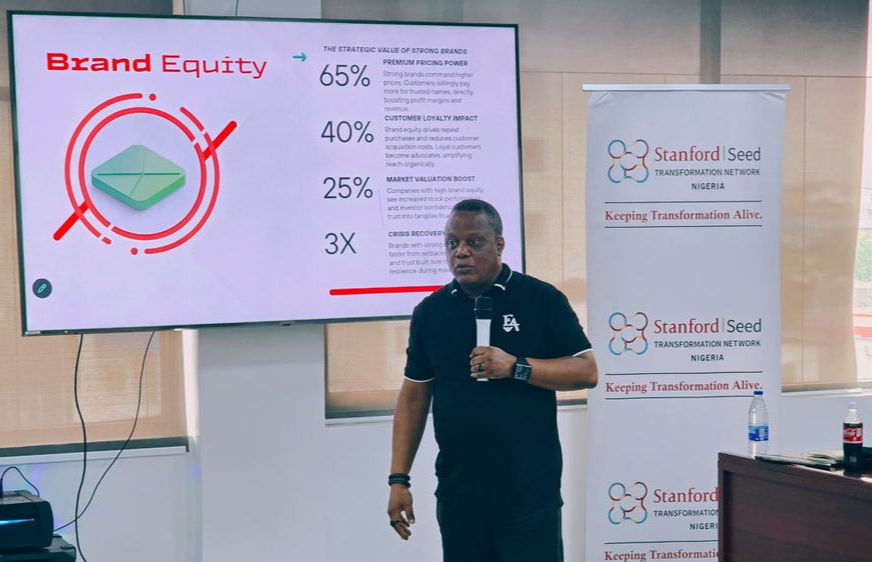
When a brand is trusted and clearly positioned, the results are measurable:
Customers are willing to pay more (premium pricing power)
Loyalty increases, reducing acquisition costs
Market value improves through investor confidence
Recovery from crises becomes faster and more effective
In essence, brand equity is not just perception; it is performance.
Understanding resilience in business
Resilience was described as the ability to withstand, adapt, recover, and grow in the face of disruption.
When applied to brands, it goes deeper.
A resilient brand is one that:
Maintains trust during uncertainty
Adjusts its value proposition and messaging when needed
Recovers from reputational or operational setbacks
Continues to strengthen customer loyalty despite challenges
Importantly, resilience is not reactive but is built intentionally over time.
How resilient brands respond to change
The session outlined practical ways brands demonstrate resilience in real time:
Critical engagement: Identifying real threats and challenges early
Market awareness: Observing trends and learning from competitors
Customer-centric response: Adjusting pricing, communication, and delivery
Asset evaluation: Repurposing existing resources to meet new demands
Narrative control: Managing perception through clear and transparent communication
Innovation under pressure: Creating new solutions in response to disruption
These are actionable strategies you can begin to implement today.

The resilience models: No one-size-fits-all
One of the most practical parts of the session was the introduction of four resilience models, illustrated through real companies:
Adaptability (Mikano Group): Flexibility in navigating local challenges
Control (Dangote Group): Dominance through ownership of the value chain
Innovation (Siemens): Growth through technology and systems thinking
Integration (Samsung): Scale and strength through vertical integration
Each model comes with its strengths and risks, reinforcing a key insight:
No single strategy fits all businesses. The environment determines the approach.
The resilience maturity ladder
Rather than choosing one model, businesses were encouraged to see resilience as a progression:
Adapt → Control → Innovate → Integrate
For many Nigerian businesses, the journey starts with adaptability, learning to navigate a challenging environment before gradually building control, investing in innovation, and eventually integrating systems for scale.

Strategic reflection for business leaders
As the session drew to a close, participants were challenged to reflect on critical questions:
Are you solving a real problem or chasing trends?
Do you control your value chain or depend heavily on others?
Can your business adapt quickly, or does structure constrain it?
Are you building for where the world is going or where it has been?
These are strategic and defining questions.
Final takeaway
Resilience is built, not inherited.
It is the result of intentional decisions, consistent actions, and a deep understanding of both your brand and your environment.
In times of change, the brands that last are not the loudest, but the most prepared.

We appreciate all members and guests who joined us for this impactful session. Your presence and engagement made the conversations richer and more meaningful.
We look forward to seeing you at our next SUITE Training on June 20. Be sure to mark your calendars, and register here! https://members.seednetwork.ng/public/events/suite-training-systems-structure-strategy-for-10x-growth-with-saidu-basharu


Comments