Member Focus: Sandra Chukwudozie of Salpha Energy
Aug 20, 2025
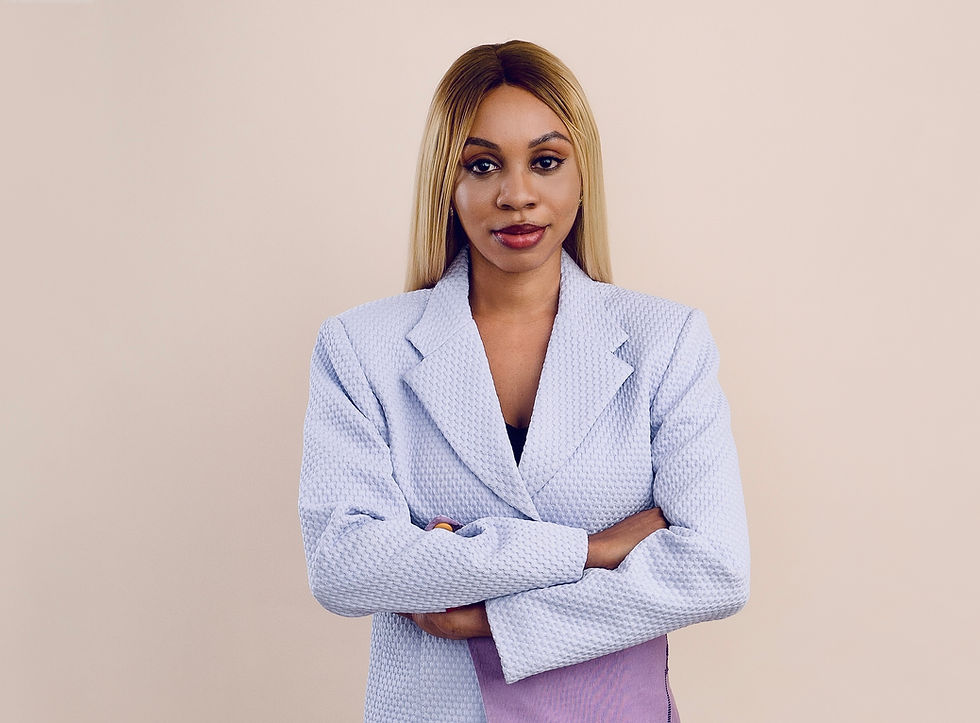
In a world where millions still live without reliable access to electricity, a new wave of African entrepreneurs is rewriting the story of energy access. One of the boldest voices leading this transformation is Sandra Chukwudozie, Founder and CEO of Salpha Energy. Since establishing the company in 2017, she has delivered solar solutions to over 2 million people, bringing power, opportunity, and hope to underserved communities. From launching the first female-owned solar home system assembly plant in Sub-Saharan Africa to expanding into large-scale industrial applications, Sandra has positioned Salpha Energy as a pioneer in Africa’s clean energy revolution.

A Forbes Africa 30 Under 30 honoree and member of the Africa Council for the Sustainable Markets Initiative (SMI), Sandra is not only building a company but also shaping global conversations around sustainability and inclusive growth. Her career spans policy work at the United Nations to running a fast-growing African business, reflecting a rare blend of international perspective and local impact. In this edition of the Seed Nigeria Member Focus, Sandra shares her inspiring journey, offering valuable insights on entrepreneurship, leadership, and the future of Africa’s energy transition.
Q: How did your time at the UN reshape how you saw yourself and influence the kind of legacy you wanted to build in Nigeria?
A: I had a life-changing moment when I joined the United Nations in New York in 2015. It was at that time that I found myself through finding an outlet where I could actively work on effecting change. This change was none other than the energy transition. That same year, the UN’s Sustainable Development Goals were unveiled and the Paris Agreement (COP 26) was also ratified by the heads of state of 174 countries as well as the European Union.
I saw the transition to clean energy as an opportunity to build my portfolio, and by becoming one of the pioneers to usher Nigeria into this era of renewable energy resources. As a young woman in Nigeria, I understood the importance of having a dream this big, the impact it would have on the country and the flame it would ignite in the hearts of young people; the underdogs, the underestimated who had something to prove. I wanted to channel the energy of the youth in order to usher in this change.

Q: You recently secured a $1.3M investment to expand Salpha Energy’s reach. How did that moment land on a personal level? What did it mean to you, emotionally or symbolically?
A: Salpha’s journey has unfolded in three distinct chapters.
First, we focused on the product: how do we design solar solutions compelling enough to make people move away from generators? That required building a lean and efficient last-mile system physically getting to the customer, demonstrating value, and earning trust.
Second, we tackled affordability. Our customers are often in the lowest income brackets. So we introduced flexible payment models to unlock access at scale.
The third chapter was localization building a local assembly plant, developing in-house technical teams, and ensuring that the solar products we deliver are optimized for African realities. That means control over design, quality, and cost.
So when the $1.3M investment came in, it marked more than growth capital. It was a clear signal that what we built was no longer just working, it was investable, scalable, and undeniably relevant. And yes it’s also significant that the only female-led solar home system assembly plant in Sub-Saharan Africa is now investment-backed. That moment was personal.

Q: As a woman leading in the renewable energy space, what have been some of the deeply personal moments, times when you questioned yourself, overcame doubt, or found strength?
A: In the early days, we struggled with unreliable suppliers and substandard components. It led to distribution challenges and trust issues with customers. That period was humbling, I thought I was solving for energy poverty, but I realized I was also up against economic power.
Because energy poverty isn’t just about lack of electricity. It’s about who captures value. While we were focused on reaching last-mile communities, we were bleeding money upstream through inflated supplier costs, poor-quality components, and foreign-owned supply chains.
That was a defining moment for me. It forced a mindset shift: we weren’t just distributors. We were builders. And if the value chain was going to change, it had to start from within by owning the supply chain, training technical talent, and making solar systems for Africa, in Africa.
Q: What was the most difficult “yes” you’ve ever had to say in your journey, personally or professionally and how did that moment shape you?
A: The hardest ‘yes’ was saying we’d build our assembly plant right here in Nigeria with all the inefficiencies, all the unknowns. Everyone told me to offshore it: cheaper, easier, less risky.
But I said yes to local manufacturing because the energy transition has to include us not just as consumers, but as creators. That yes meant investing in systems where none existed, training talent from scratch, and absorbing the risk personally.
But it also gave birth to something rare: a blueprint for how the next generation of climate-tech companies in Africa can own their future end to end.

Q: You’ve intentionally built a women-inclusive company as over 75% of Salpha Energy’s workforce is female. Why is this so important to you personally?
A: Because energy systems have historically been built without women in mind both in terms of who designs them and who benefits from them. At Salpha, we’re not just reversing that pattern. We’re designing forward.
We’ve made women’s inclusion a core part of our strategy not just because it’s right, but because it makes the business stronger. From manufacturing to distribution, we’ve seen firsthand that when women are empowered with the right tools, training, and decision-making authority, performance improves. Retention improves. Impact scales faster.

But it’s also personal. I’ve worked in rooms where women’s perspectives were dismissed not because they lacked insight, but because the system never expected them to speak. So when I had the chance to build something from the ground up, I built it differently. I built it with women in mind from day one.
For us, inclusion isn’t a CSR statement it’s a competitive advantage. And in an industry that’s reshaping the future, there’s no excuse to build it using the exclusions of the past.
Q: When you think of the impact Salpha Energy is making, what stories stick with you most, stories that moved you or reminded you of why this work matters?
A: When people think about energy access, they often talk about numbers the millions still in the dark. But for me, the real impact is personal. It lives in the stories of people like Beatrice.
Beatrice is a married woman in Cross River State unemployed, caring for her toddlers, and completely dependent on her husband to survive. Not by choice, but because unemployment in her community left her with no options.
She was frustrated. Depressed. Stuck. Like many women in Nigeria, she was raised in a society that taught her that work, especially technical work, wasn’t for women. And even if she dared to dream, the opportunities didn’t exist.
Today, Beatrice works in our factory assembling solar systems, earning a living, and building skills in a male-dominated field. And more than that, she’s building confidence. She’s rewriting the story for herself, for her family, and for every young girl watching.
That’s what Salpha is about. Yes, we’ve reached over 2 million people with solar. But our mission goes beyond access we’re in the business of Energy Freedom. And for women especially, energy freedom is life-changing. It’s the difference between dependency and dignity.
Between being told what’s possible and deciding that for yourself.
Every time I walk into the factory and see women like Beatrice thriving, I’m reminded that this work isn’t just about light. It’s about liberation.

Q: Balancing vision, execution, and personal growth isn’t easy. What routines, support systems, or mindset practices help keep you grounded and aligned?
Gratitude keeps me dangerous. It reminds me that I’ve already survived things that once felt impossible. That grounds me.
Working out sharpens my discipline and it’s a form of resistance too. I need strength, stamina, and clarity to lead under pressure.
I also lean into stillness when I can. Reflection is my way of staying aligned. I don’t just want to move fast, I want to move with clarity.
Q: What would you say to any young African woman with a bold idea but thoughts of, “Can I really do this?”... What would you say to her from your heart?
A: The biggest regret is often the regret of not listening to your own voice. So make it a daily discipline to imagine the woman you want to become and show up like her, even when no one is watching.
Read people’s stories. Watch their journeys. Not to copy them, but to remember that greatness is always imperfect at the start.
You don’t need perfect conditions. You just need to move. Doubt is normal. What matters is choosing faith over fear and starting anyway.

Sandra’s story is one of vision, resilience, and purpose. Through Salpha Energy, she has redefined what is possible in the clean energy sector by demonstrating that access can be both scalable and inclusive. By creating affordable solar solutions and investing in local talent, particularly women and youth, she has built more than an energy company; she has built an ecosystem of empowerment.
Her journey reminds us that leadership is about more than innovation, it is about the lives touched and the futures transformed. As members of this network, we celebrate Sandra as a shining example of purpose-driven entrepreneurship and look forward to the continued impact of her work in shaping Africa’s sustainable energy future.
Other News

Vanguard Pharmacy Expands Healthcare Access with 13th Branch in Ogbomosho
In Ogbomosho, Oyo State,Vanguard Pharmacy Limited has marked another milestone with the unveiling of its 13th branch along the bustling Ogbomosho–Ilorin Road. The development, which has drawn praise from government officials, traditional rulers, and pharmacy professionals, reinforces the company’s mission to make quality healthcare accessible while stimulating local economic growth. On the 28th of March, speaking at the grand opening, Secretary to the State Government, Prof. Musibau...

From Plans to Results: Key Takeaways from Seyi Abolaji’s IWD Webinar
As part of the International Women’s Day event series by Stanford Seed Network Nigeria, participants joined an insightful session led by Seyi Abolaji, Co-founder of Wilson’s Juice Company. Titled “Operations and Execution: Turning Your Business Plan into Action,” and moderated by Roseline Ilori, Founder/CEO, Bridge57 Solutions, the session addressed a common challenge for many entrepreneurs, having a clear vision, but struggling with execution. Why Execution Matters Seyi began by highlighting...