

Lily Hospitals: Building a World-Class Healthcare Network from the Niger Delta to the Nation
Mar 11, 2026
In a healthcare environment where trust is fragile and quality often inconsistent, Lily Hospitals has spent decades building something far more enduring than infrastructure, it has built institutional credibility.
Founded in 1984 and restructured under Nigerian ownership in the late 1990s by Dr. Augustine Aregbeye Okogun, Lily Hospitals has evolved from a modest medical facility into one of Nigeria’s most respected private healthcare networks.

Under Dr. Okogun’s leadership, the institution transitioned from a standalone hospital into a multi-location, integrated healthcare system with a clear mandate: deliver globally benchmarked, patient-centered care within Nigeria.
Today, Lily Hospitals operates across key cities including Warri, Benin City, Port Harcourt, and Lagos, expanding access to specialized healthcare in regions where quality medical infrastructure has historically lagged demand.
A Strategic Reinvention: From Local Facility to Regional Healthcare Network
When Dr. Okogun and his Co-founders assumed management in 1998 and full ownership in 2001, the ambition was not incremental growth, it was systemic transformation.
The strategy was clear:
Increase profitability
Increase customer satisfaction
Increase operational efficiency & effectiveness
Improve the quality of our people
This approach positioned Lily Hospitals not merely as a service provider, but as a healthcare institution designed for scale and sustainability.
The hospital group gradually expanded its specialties, introduced advanced diagnostic equipment, strengthened clinical governance systems, and implemented quality assurance processes that few private hospitals in Nigeria had operationalized at the time.
Clinical Breadth: A Full Spectrum Healthcare Institution
Lily Hospitals delivers comprehensive care across multiple specialties, including:
General Medicine & Family Practice
Obstetrics & Gynaecology
Paediatrics
Surgery (General & Specialized)
Intensive Care & Emergency Medicine
Cardiology & Cardiovascular Diagnostics
Radiology & Advanced Imaging
Laboratory & Diagnostic Services
Dental & Dermatology Units


From routine checkups to complex surgical interventions, Lily’s model is built on continuity of care, ensuring patients move seamlessly across diagnostic, clinical, and recovery pathways within a single system.
Its 24/7 emergency services and critical care units further reinforce its role as a trusted referral center across southern Nigeria.
Quality as Infrastructure: Certifications and Accreditations
While many institutions speak about quality, Lily Hospitals operationalized it.
The hospital group achieved:
ISO 9001:2015 Quality Management System (QMS)
ISO 14001:2015 Environmental Management System (EMS)
ISO 20000:2018 Information Technology Service Management (ITSM)
ISO 22301:2019 Business Continuity Management System (BCMS)
ISO 27001:2022 Information Security Management System (ISMS)
ISO 15189:2022 Medical Laboratory (certification process completed; awaiting issuance of certificate from NiNAS)
Accreditation by the Council for Health Service Accreditation of Southern Africa (COHSASA)
Multiple recognitions including Best Private Healthcare Service Provider at the Nigerian Healthcare Excellence Awards (2019 and 2022)
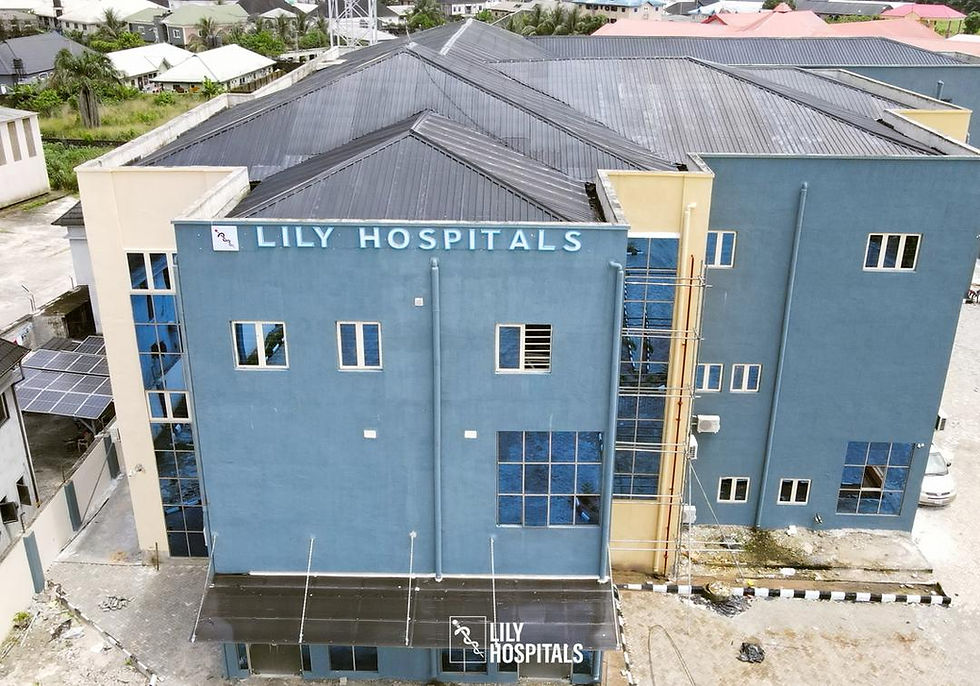
These milestones are not only symbolic. They represent structural alignment with global standards in:
Patient safety
Clinical governance
Operational systems
Continuous performance improvement
For a private healthcare institution operating within Nigeria’s complex healthcare environment, these certifications signal institutional maturity.
Human Capital as a Strategic Priority
Healthcare infrastructure without skilled personnel is ineffective. Lily Hospitals recognized this early.
Through structured training programs and the establishment of Lily Academy, the institution has invested in developing clinical and administrative talent. The Academy supports training in radiology, family medicine, pharmacy, and healthcare management, strengthening both internal capacity and the broader healthcare ecosystem.
This commitment to workforce development reflects a long-term vision: sustainable healthcare requires talent pipelines, not just buildings.
Leadership: Dr. Okogun’s Vision
At the center of Lily Hospitals’ transformation is Dr. Augustine Aregbeye Okogun, a physician, healthcare executive, and systems builder.
His leadership philosophy emphasizes:
Clinical excellence with accountability
Institutional governance
Technology-driven diagnostics
Ethical patient-centered care

Rather than expanding recklessly, Lily Hospitals has pursued measured, standards-driven growth, reinforcing stability while scaling operations.
Dr. Okogun’s strategic focus on accreditation, structured expansion, and specialist integration has positioned Lily Hospitals as one of the most structured private healthcare systems in the region.
Community Trust and National Impact
Beyond infrastructure and certifications, Lily Hospitals has built something less visible but equally critical: trust.
Operating in multiple states, the institution serves thousands of patients annually, including families, corporate clients, and referral cases from surrounding facilities.
Its expansion into metropolitan hubs like Lagos further signals ambition, not just regional presence but national relevance.
The hospital’s ongoing investments in diagnostics, digital health integration, and service delivery modernization demonstrate preparedness for the next era of Nigerian healthcare.

The Road Ahead
As Nigeria confronts healthcare access gaps, medical tourism challenges, and infrastructure deficits, institutions like Lily Hospitals represent a viable private-sector model for transformation.
The future trajectory includes:
Expanded specialty centers
Enhanced digital health systems
Broader corporate healthcare partnerships
Continued accreditation alignment with international standards
They remain at the forefront of providing and delivering quality patient-centered, responsive, and technology-driven care across various locations in Nigeria to both citizens and foreign nationals.
Learn more: https://lilyhospitals.com/
Other News

Inside the Seed Nigeria April Members' Hangout: An Evening of Connection, Insight, and Shared Experience
There are moments within our network that go beyond structured sessions and formal engagements, moments where connection becomes more natural, conversations more open, and the value of community more evident. The April Members Hangout was one of those moments. From the very start, the atmosphere was warm and welcoming. Members arrived to familiar faces, shared greetings. For some, it was a chance to reconnect after a while. As the evening unfolded, conversations began to flow across tables,...

SUITE Training Recap: Building Brand Resilience in Times of Change
What makes a brand survive uncertainty, and more importantly, what makes it win after it? At the recent SUITE Training held on Saturday, the 18th of April, 2026, at Greenpeg Engineering HQ in Lagos, Stanford Seed Nigeria hosted an in-depth and highly practical session led by Temitope Louis, MD/CEO of TradeEdge Limited. The focus was clear and timely: how to build resilient brands in times of change. Beyond the theme, what unfolded was a powerful breakdown of how identity, branding, and brand...
